
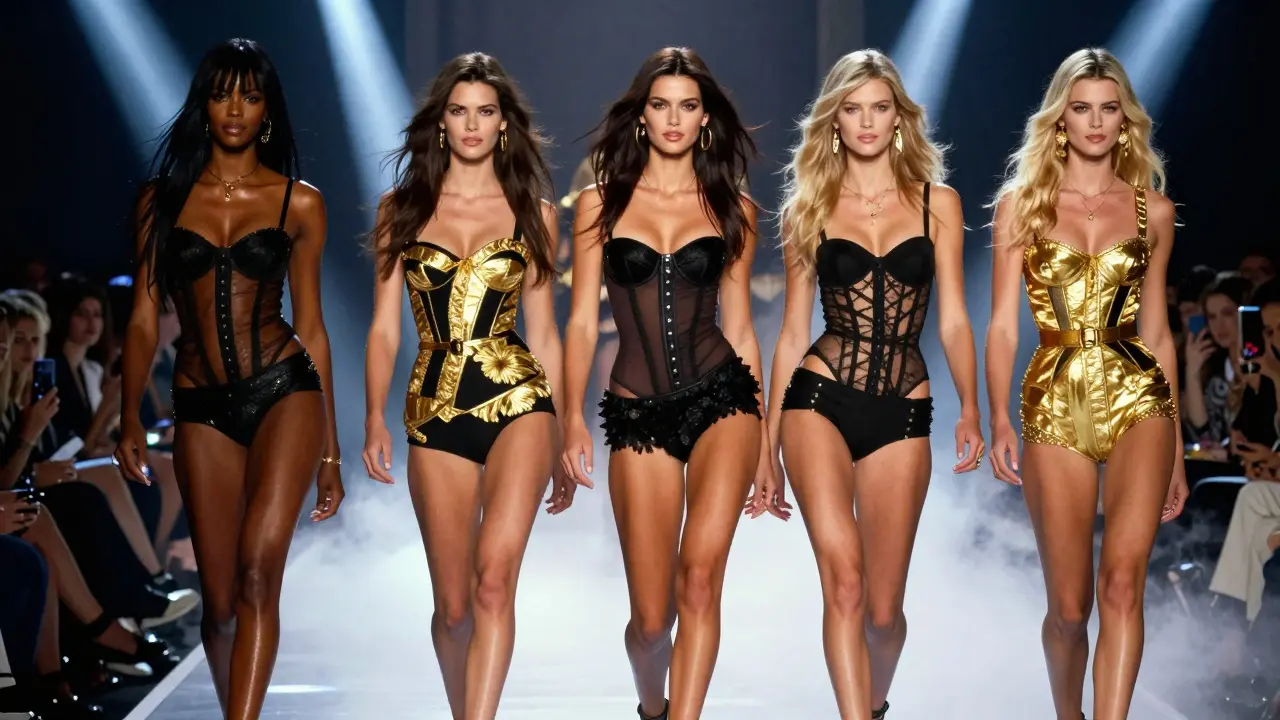
Supermodels aren’t just tall women walking runways. They’re cultural forces who changed how the world sees beauty, power, and identity. In the 1980s and 90s, a handful of women didn’t just sell clothes-they sold dreams, rebellion, and confidence. Their faces appeared on billboards, magazine covers, and TV ads. They earned millions. They became household names. And they didn’t wait for permission to redefine what it meant to be beautiful.
What Made a Supermodel Different?
Before supermodels, models were background players. They wore the clothes, smiled politely, and disappeared after the shoot. Supermodels broke that mold. They had personality. They spoke in interviews. They acted in movies. They launched perfume lines. They owned their image.
Naomi Campbell, Cindy Crawford, Linda Evangelista, Claudia Schiffer, and Christy Turlington weren’t just hired for their looks. They had presence. Linda Evangelista once said, "I don’t get out of bed for less than $10,000 a day." That wasn’t arrogance-it was a new business model. Models weren’t just labor anymore. They were brands.
Their contracts included exclusivity deals, royalties from ads, and creative control. Designers like Gianni Versace and Karl Lagerfeld didn’t just dress them-they built entire campaigns around them. Vogue didn’t just feature them; they turned them into cover stars for months on end.
Beauty Standards Before and After
Before supermodels, beauty in fashion was narrow. Pale skin, delicate features, and a certain fragility were prized. Supermodels changed that. Cindy Crawford had a mole. Naomi Campbell had dark skin and a powerful walk. Linda Evangelista had sharp cheekbones and an unapologetic gaze. They weren’t trying to fit into an old ideal-they were creating a new one.
By the mid-90s, fashion magazines stopped pretending that beauty was one-size-fits-all. The supermodels proved that confidence, individuality, and charisma mattered more than matching a checklist. A 5’10” woman with a strong jawline could be more desirable than a 5’5” girl with perfect symmetry.
This shift didn’t happen overnight. It was pushed by photographers like Peter Lindbergh, who stripped away heavy makeup and retouching to show real skin, real texture, real emotion. His 1990 cover of British Vogue, featuring seven supermodels in white shirts, became iconic-not because they were flawless, but because they looked like they could walk off the page and take over the world.
The Business of Being a Supermodel
Supermodels turned modeling into a multi-billion-dollar industry. By 1990, the top five supermodels were earning more than $10 million a year each. That’s more than most Hollywood stars at the time. They didn’t just walk for Chanel-they starred in ads for Pepsi, Estée Lauder, and Tommy Hilfiger.
They had agents who negotiated like Hollywood executives. They had publicists, stylists, and lawyers. They licensed their names for fragrances, cosmetics, and even lingerie lines. Claudia Schiffer’s perfume, "Claudia Schiffer", sold over 10 million bottles worldwide. Naomi Campbell launched her own line of jeans. These weren’t side projects-they were full businesses.
Their income streams were diverse: runway, print ads, TV commercials, endorsements, licensing, and even book deals. They were the first models to treat their careers like corporations. And they set the standard for every model who came after them.
How They Changed Fashion Design
Designers didn’t just dress supermodels-they designed for them. Gianni Versace created bold, body-hugging dresses because he knew Naomi Campbell could carry them. Versace’s safety-pin dress, worn by Elizabeth Hurley in 1994, became legendary not just because of the design, but because of the confidence of the woman wearing it.
Supermodels influenced fabric choices, silhouette cuts, and even runway pacing. Designers started building collections around movement, not just static beauty. They wanted models who could command attention with a stride, not just a pose.
That’s why runway shows became performances. The supermodels didn’t just walk-they owned the space. Their walks were studied, copied, and imitated. Some even had signature steps: Naomi’s powerful hip sway, Cindy’s confident smirk, Linda’s icy stare.
The Legacy: Who Carries the Torch Today?
The golden era of supermodels faded by the early 2000s. Reality TV, social media, and fast fashion changed the game. Today, influencers with millions of followers can sell a pair of jeans faster than a supermodel could on a magazine cover.
But the DNA of the supermodel is still alive. Gigi Hadid, Bella Hadid, and Kendall Jenner carry the same confidence, the same business savvy. They don’t just model-they launch beauty brands, design clothing lines, and negotiate equity in their partnerships. Bella Hadid co-founded a skincare brand. Kendall Jenner became a billion-dollar brand through her work with Estée Lauder and Pepsi.
Even the way models are cast today reflects their legacy. Agencies don’t just look for height and measurements anymore. They look for personality, social media presence, and marketability. The supermodels taught the industry that a model isn’t just a mannequin. She’s a storyteller.
Why Supermodels Still Matter
Supermodels didn’t just change fashion. They changed society’s view of women in power. They showed that beauty could be loud, bold, and unapologetic. They proved that women could earn more than men in the same industry. They broke racial barriers-Naomi Campbell was the first Black woman to appear on the cover of French Vogue in 1988.
They also exposed the dark side. The pressure to be perfect led to eating disorders, exploitation, and burnout. Many of them spoke out later in life. Linda Evangelista said she lost years of her life to the industry’s demands. But even their struggles became part of the story-making them more human, more real.
Today, when a young woman walks into a casting and says, "I’m not just here to wear clothes. I’m here to make a statement," she’s channeling the spirit of the supermodels. They didn’t wait to be chosen. They took control. And that’s the real legacy.